Unsere Produkte
Entdecken Sie unser umfassendes Sortiment an hochwertigen Speiseölen, pflanzlichen Wachsen und Industriewachsen.
Zeige 74 Produkte

Micronised Wax Powder for Coatings and Inks
A fine wax powder that disperses into solvent-based coatings and inks by high-speed stirring alone, at 0.5-3%, without a separate milling stage.

Polyester Wax
A synthetic polyester wax supplied as a white powder, used where a wax must both lubricate and disperse pigment in engineering plastics and masterbatch.

Lanolin Wax
Lanolin wax is the hard, high-melting fraction separated from lanolin by solvent fractionation. It keeps lanolin's occlusive and emollient character but sets firm, which suits sticks, balms and anhydrous products.

Custom Beeswax Blends
Custom beeswax blends are formulated to a customer's own brief, pairing beeswax with vegetable or mineral waxes at a specified ratio, melting point and hardness, for makers whose format needs a wax no standard grade matches.

Coconut-Beeswax Blend
Coconut-beeswax blend combines the strong fragrance release of hydrogenated coconut oil with the firmness and long burn of beeswax. The result is a soy-free natural container wax with a subtle honey character.

Soy-Emulsifier Candle Wax Blend
Soy-emulsifier candle wax blend is a soy base compounded with an emulsifier package to stabilise high fragrance loads. It is chosen where scent strength is the priority and the formulation does not need to carry a vegan claim.

Rapeseed-Soy-Coconut Wax Blend
Rapeseed-soy-coconut wax blend combines three vegetable waxes: rapeseed for a European base and clean surface, soy for structure and cost, coconut for fragrance throw. The result is a fully plant-based container wax.

Rapeseed-Paraffin-Microcrystalline Wax Blend
Rapeseed-paraffin-microcrystalline blend adds a microcrystalline fraction to a rapeseed and paraffin base. The microcrystalline wax contributes flexibility and adhesion, which suppresses cracking and improves the finish on larger candles.

Bienenwachs
Bienenwachs, das auf natürliche Weise von Honigbienen (Apis mellifera) produziert wird, wird zum Bau von Waben abgesondert. Es besteht aus Estern, Fettsäuren und Kohlenwasserstoffen und ist langlebig, biegsam und wasserbeständig.

Vollständig raffiniertes Paraffinwachs (50-68°C)
Bio-Grünwachs, vollständig raffiniertes Paraffin (50–68 °C) – Lebensmittel-/Pharmaqualität, <0,5 % Öl, überlegene Härte. Perfekt für Kerzen, Kosmetika, Verpackungen und Präzisionsindustrieanwendungen.

Mikrokristalline Wachs
Mikrokristallines Wachs ist ein raffiniertes Erdölwachs mit feiner Kristallstruktur, das eine überlegene Flexibilität, Haftung und höhere Schmelzpunkte als Paraffin bietet. Ideal für Kosmetika, Klebstoffe, Beschichtungen und Spezialanwendungen weltweit.

Polyethylenwachs (PE-Wachs)
ist ein Polyethylen mit niedrigem Molekulargewicht, das als Hochleistungsschmiermittel und Verarbeitungshilfsmittel in Kunststoffen, Beschichtungen, Tinten und Klebstoffen verwendet wird und den Fluss, die Oberflächengleitfähigkeit und die Kratzfestigkeit verbessert.

Halbraffiniertes Paraffinwachs (50-68°C)
Halbraffiniertes Bio-Grünwachs-Paraffin (50–68 °C) – kostengünstiger Ölgehalt von 1–5 % für Kerzen, Gummi, Textilien und großvolumige industrielle Anwendungen.

Fischer-Tropsch (FT) Wachs
Fischer-Tropsch (FT)-Wachs ist ein hochreines synthetisches Paraffinwachs, das aus Synthesegas hergestellt wird und einen hohen Schmelzpunkt, eine niedrige Viskosität und eine ausgezeichnete Härte für anspruchsvolle Anwendungen in Kunststoffen, Beschichtungen, Tinten, Klebstoffen und Bitumenmodifikationen bietet

Kokoswachs
Kokosnusswachs, gewonnen aus Kokosnussöl (wissenschaftlicher Name: Cocos nucifera), entsteht durch Hydrierung des Öls aus reifen Kokosnusskernen zu einem cremigen, festen Wachs. Dieser Prozess stabilisiert das Öl, erhöht seinen Schmelzpunkt und erzeugt ein langsam brennendes, umweltfreundliches Wachs.

Sojawachs
Sojawachs (CAS 8016-70-4, INCI Hydrogenated Soybean Oil) ist durch Hydrierung gehärtetes Sojabohnenöl. Es wird in Form von Blöcken, Flocken oder Pellets mit Schmelzpunkten von 42 bis 58 Grad Celsius geliefert und ist das Standard-Naturwachs für Behälterkerzen.

Rapsölwachs
Rapswachs, gewonnen aus Rapsöl (wissenschaftlicher Name: Brassica napus), entsteht durch Hydrierung und Fraktionierung des Öls. Es ist nachhaltig, biologisch abbaubar und hat eine cremige Textur mit einem relativ hohen Schmelzpunkt.

Hydriertes Rizinusöl (Rizinuswachs)
Hydriertes Rizinusöl, auch Rizinuswachs genannt, wird aus Rizinussamen (wissenschaftlicher Name: Ricinus communis) durch Hydrierung von Rizinusöl zu einem harten, spröden Wachs gewonnen. Es ist reich an Hydroxylfettsäuren, wasserunlöslich, aber sehr stabil, mit einem Schmelzpunkt von etwa 80–85 °C.

Rohwachs LMO (Leichtes Maschinenöl)
Hellste und blasseste Rohparaffingsorte, gewonnen aus der leichten Maschinenöl-Destillationsfraktion mit einem Ölgehalt von 10–25 % und einem Schmelzpunkt von 47–53 °C.

Rohwachs SPO (Spindelöl)
Mittelhelles Paraffaching aus der Spindelöldestillationsfraktion mit einem Ölgehalt von 5–20 % und einem Schmelzpunkt von 53–58 °C.

Slack Wax MMO (Mittelgroßes Maschinenöl)
Mittelschweres Rohparaffin aus der mittleren Maschinenöldestillationsfraktion mit einem Ölgehalt von 5–15 % und einem Schmelzpunkt von 58–64 °C.

Rohparaffin DAO (Entasphaltierungsöl)
Schwerste Rohparaffingsorte, gewonnen aus der entasphaltierenden Ölfraktion mit einem Ölgehalt von 5–20 % und einem Schmelzpunkt von 69–74 °C.
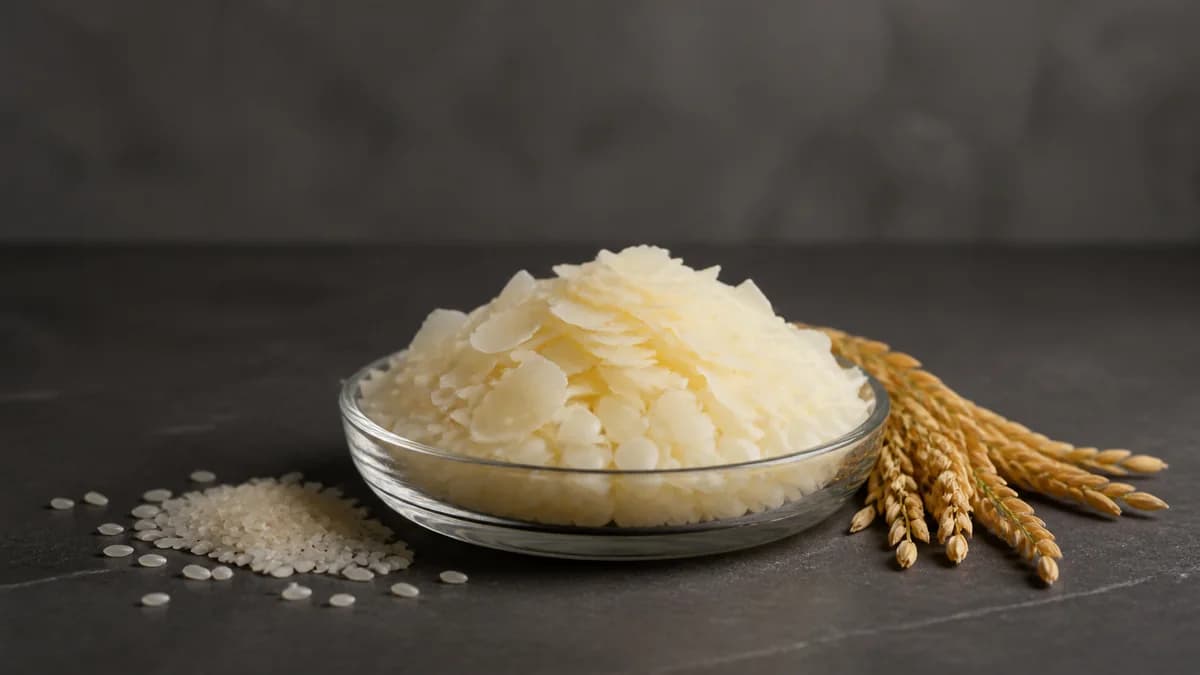
Rice Bran Wax
Rice bran wax (CAS 8016-60-2, INCI Oryza Sativa Bran Wax) is recovered during the refining of rice bran oil. Melting at 77 to 82 degrees Celsius, it is a hard vegan wax valued for its ability to gel liquid oils at very low addition.
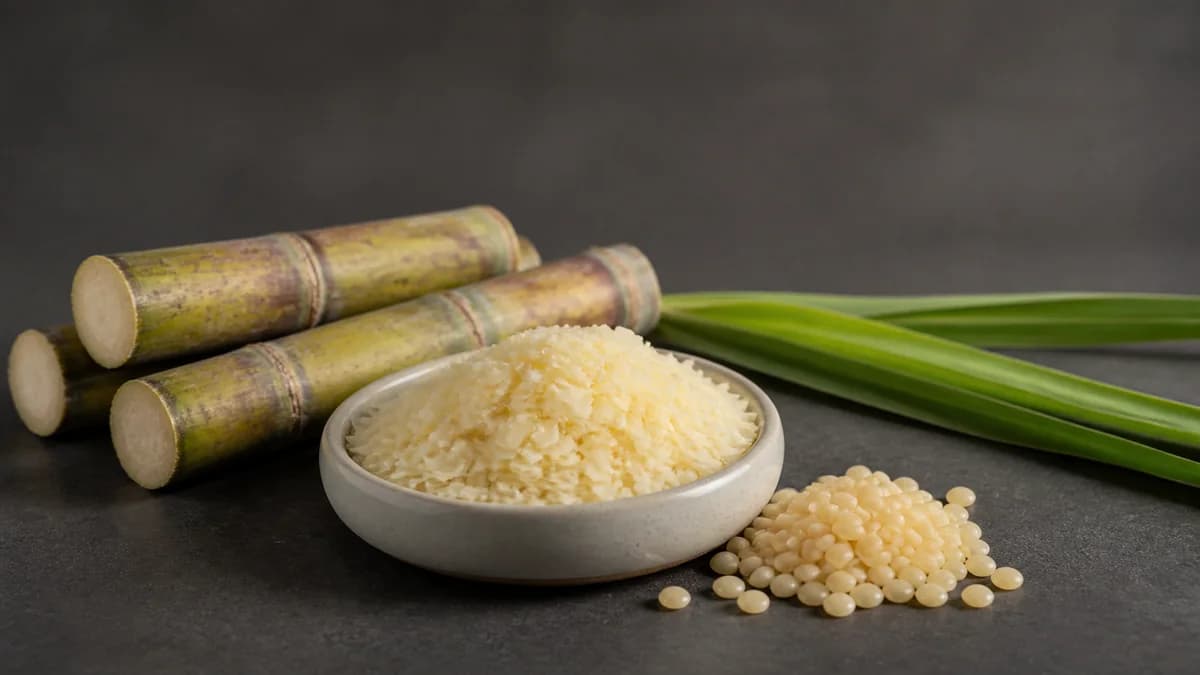
Sugarcane Wax
Sugarcane wax (INCI Saccharum Officinarum Cera) is recovered from the filter press mud left over from sugar milling. Melting at 76 to 82 degrees Celsius, it is a hard, glossy vegan wax with a composition close to carnauba.
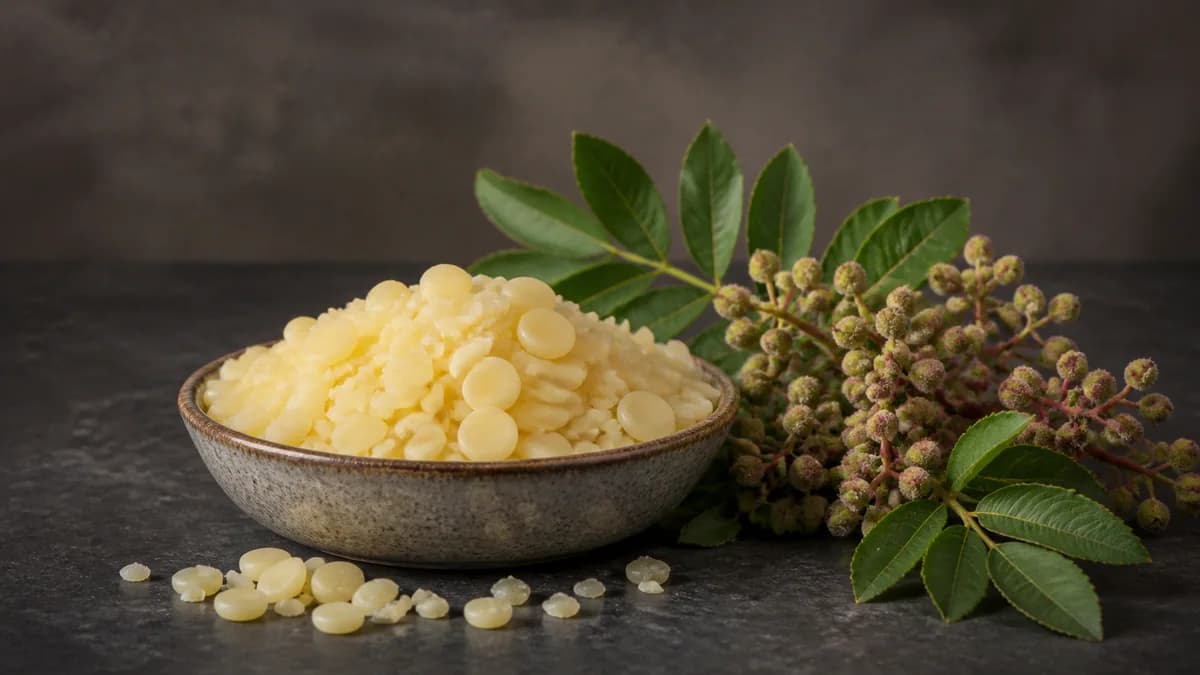
Sumac Wax
Sumac wax (CAS 8001-39-6, INCI Rhus Succedanea Fruit Wax), traditionally called Japan wax, is pressed from the berries of the wax tree. Despite the name it is a fat rather than a true wax, which gives it an unusually soft, tacky character.
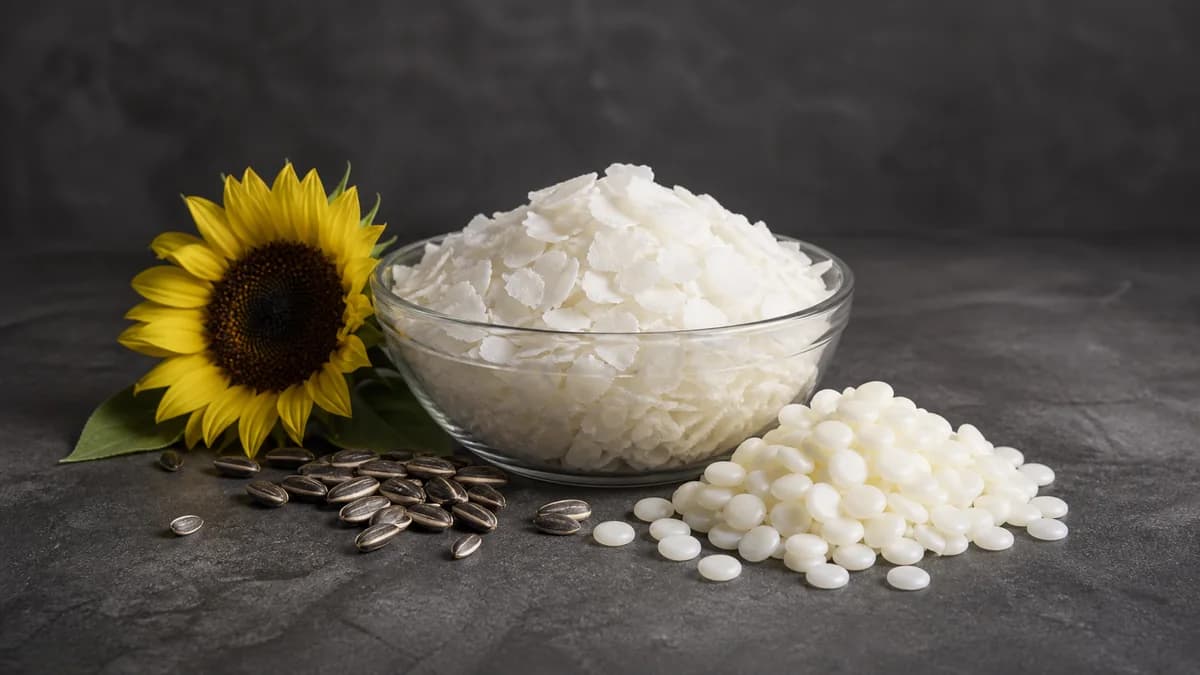
Sunflower Wax
Sunflower wax (CAS 91082-37-0) is recovered when sunflower oil is winterised. Melting at 74 to 77 degrees Celsius, it is among the most efficient natural oil structurants known, forming a firm gel at additions of only a few percent.
Candelilla Wax
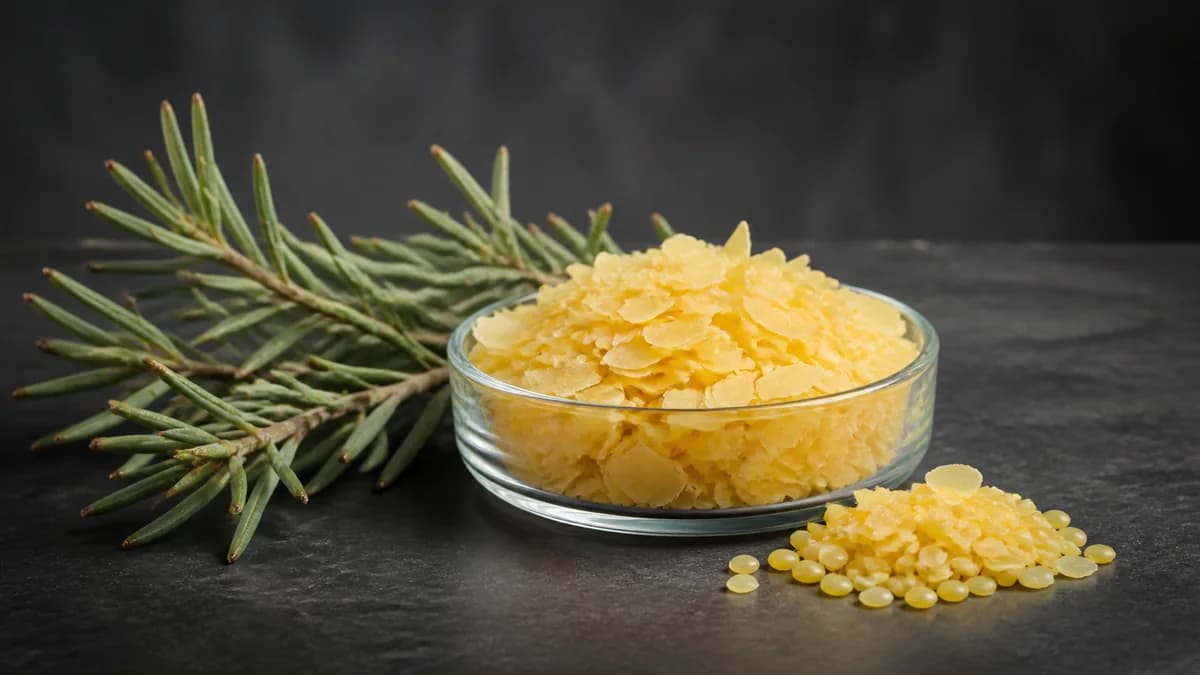
Candelilla wax (CAS 8006-44-8, INCI Euphorbia Cerifera Wax) is scraped from the stems of a desert shrub that grows in northern Mexico. Hard, brittle and vegan, it is the usual plant-based replacement for beeswax in cosmetics.
Synthetic Beeswax
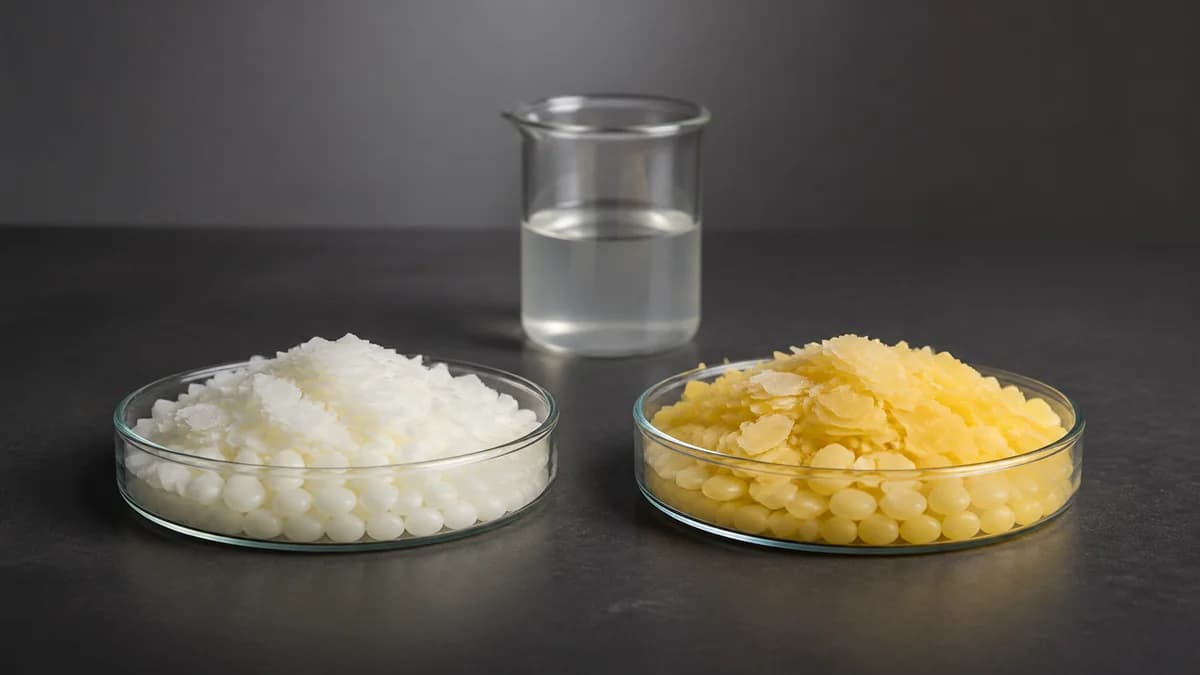
Synthetic beeswax (INCI Synthetic Beeswax) is a blended wax engineered to reproduce the melting point, texture and ester profile of natural beeswax at 61 to 65 degrees Celsius, with consistency natural beeswax cannot offer.
Synthetic Vegan Beeswax
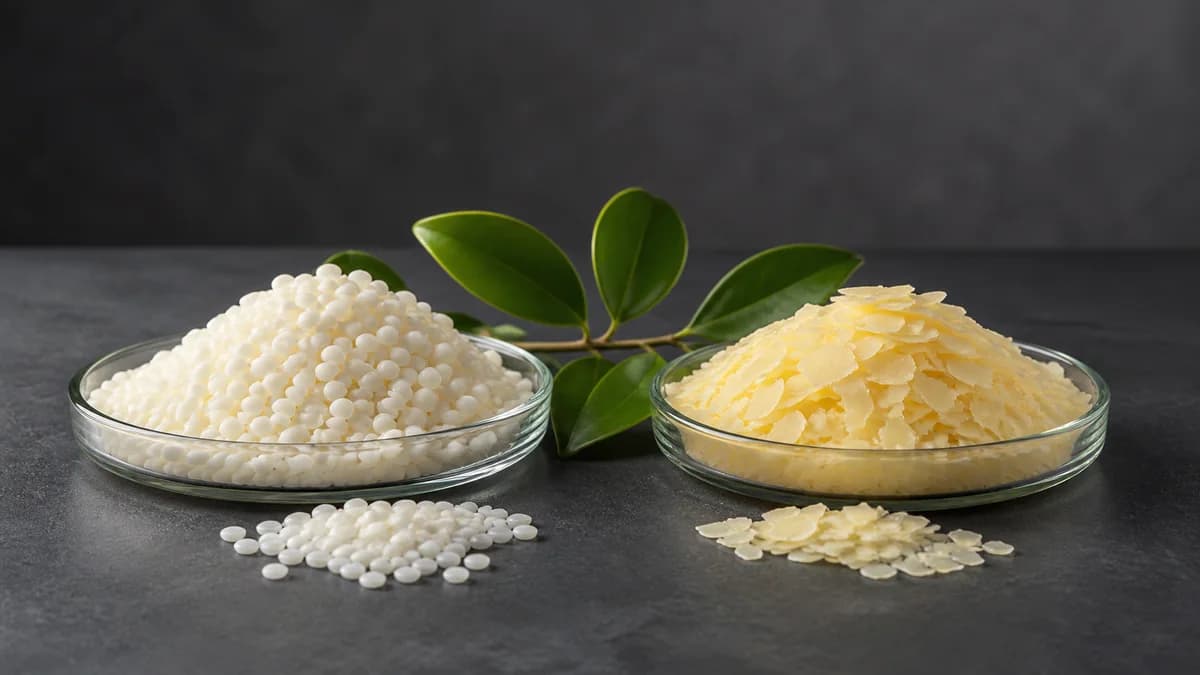
Synthetic vegan beeswax (INCI Synthetic Beeswax) reproduces the 61 to 65 degree melting point and working texture of beeswax from entirely non-animal ingredients, for formulations that must carry a vegan or cruelty-free claim.
Palm Sand Wax (Crystal Wax)
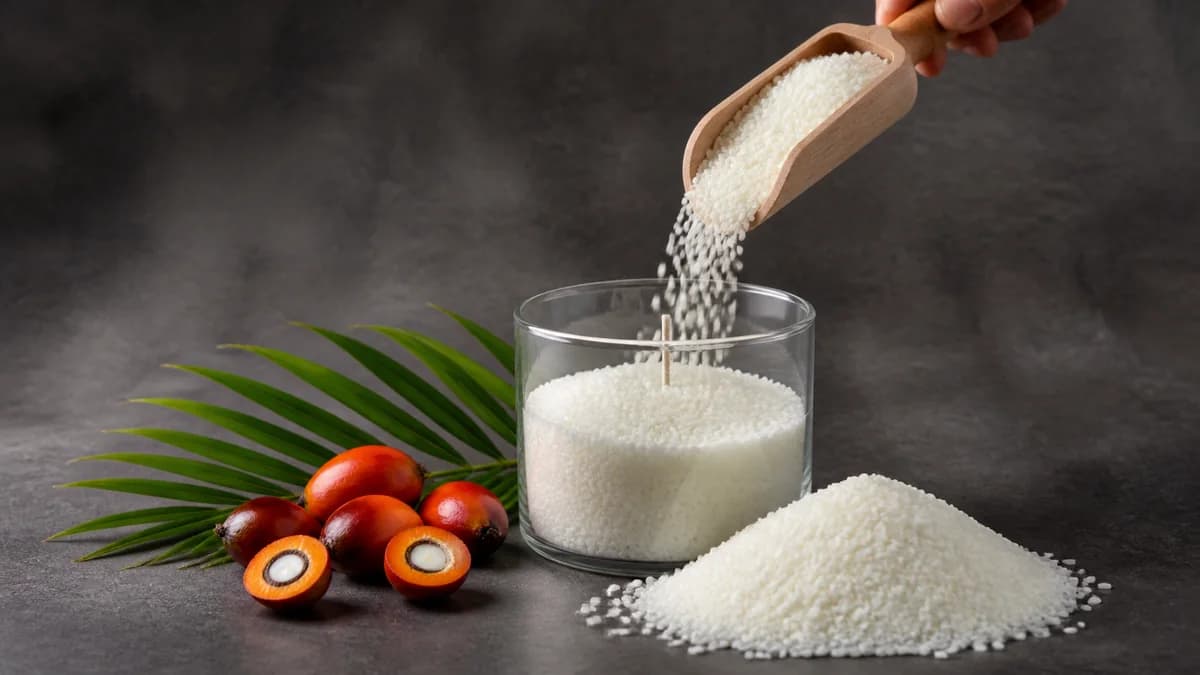
Palm sand wax, also called crystal wax (CAS 8021-56-5, INCI Hydrogenated Palm Oil), is uncoloured granulated palm wax melting at 56 to 60 degrees Celsius. It is used cold, poured around a wick, and takes added colour and fragrance readily.
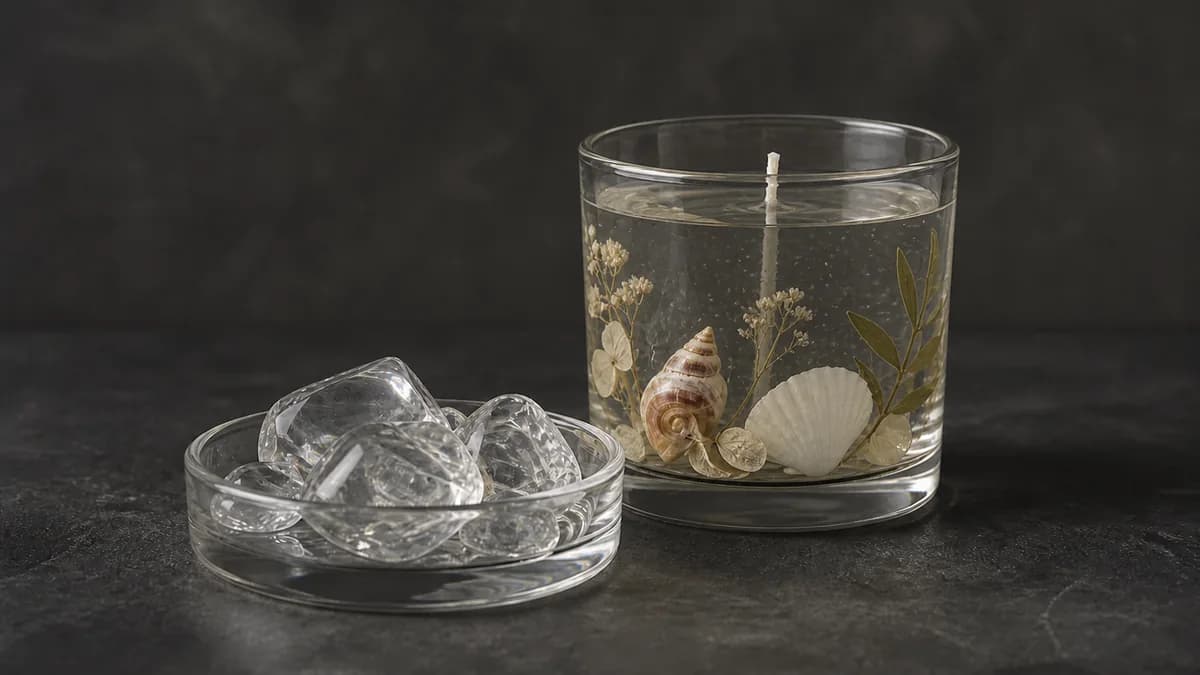
Gel Wax - Soft (Container Grade)
Soft gel wax is the container grade of transparent gel candle medium, with a lower polymer loading than the hard grade. It pours more easily, releases fewer bubbles and gives the clearest finish, but needs a vessel to hold its shape.
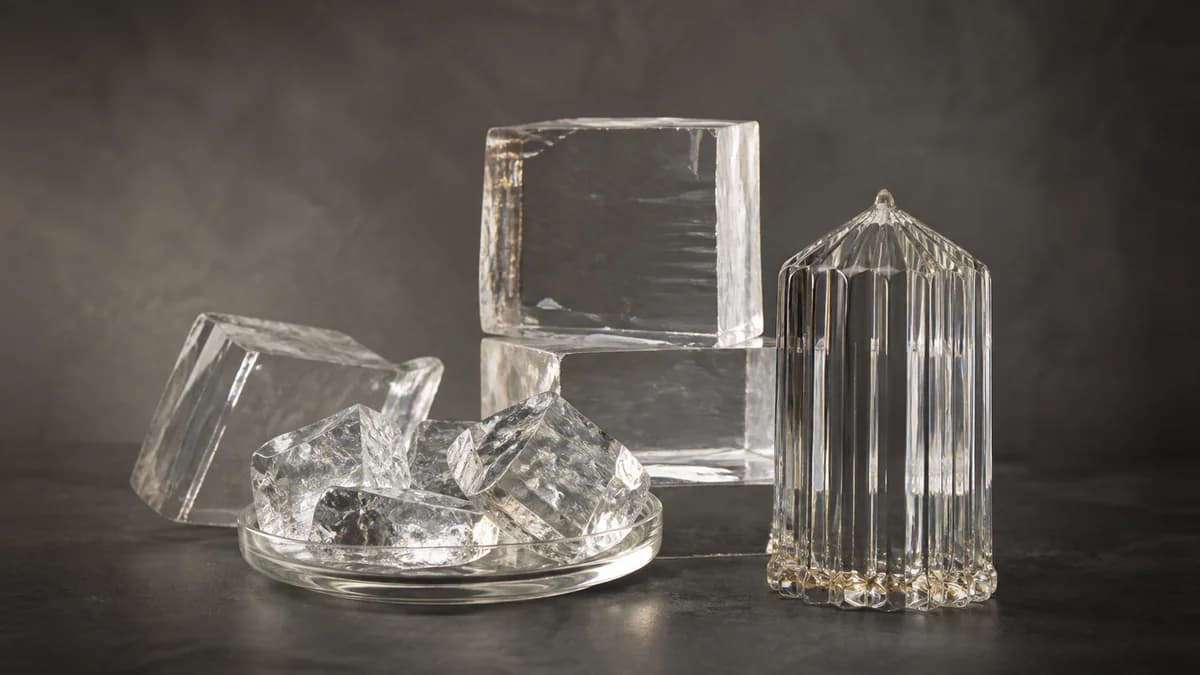
Gel Wax - Hard (Moulded Grade)
Hard gel wax is a moulded-grade transparent candle medium made from white mineral oil gelled with a polymer resin. Melting at 60 to 80 degrees Celsius, it sets firm enough to stand as a free-standing shape without a container.
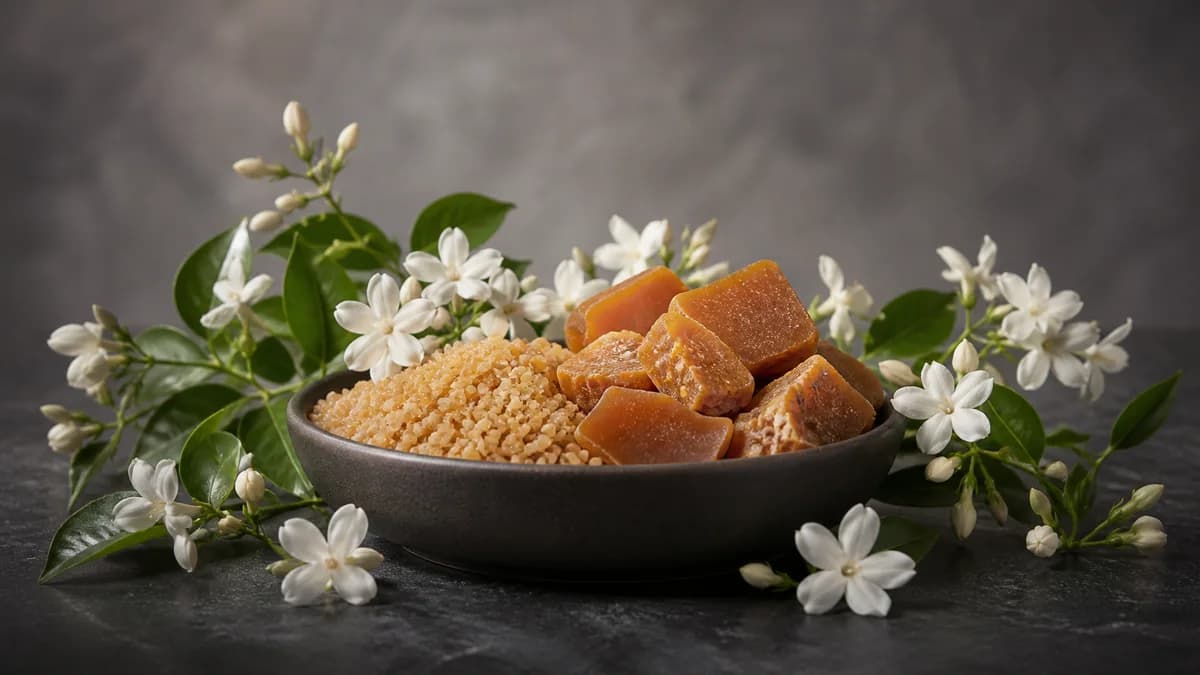
Jasmine Floral Wax
Jasmine floral wax (CAS 91770-14-8) is the waxy fraction separated during production of jasmine absolute. Melting at 62 to 68 degrees Celsius, it carries a true jasmine scent from the flower itself rather than from added fragrance.
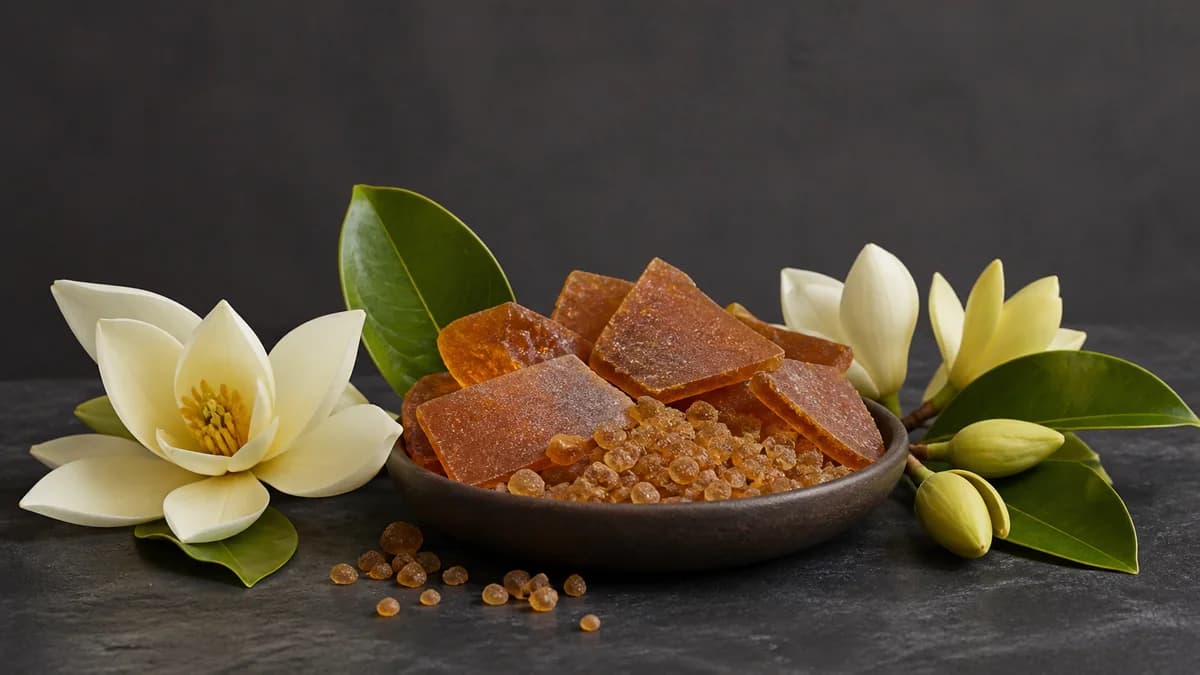
Michelia Alba Floral Wax
Michelia alba floral wax (CAS 92457-18-6) is the wax fraction from white champaca absolute production. It melts at 62 to 68 degrees Celsius and carries the flower's fresh, green-floral, tea-like scent.
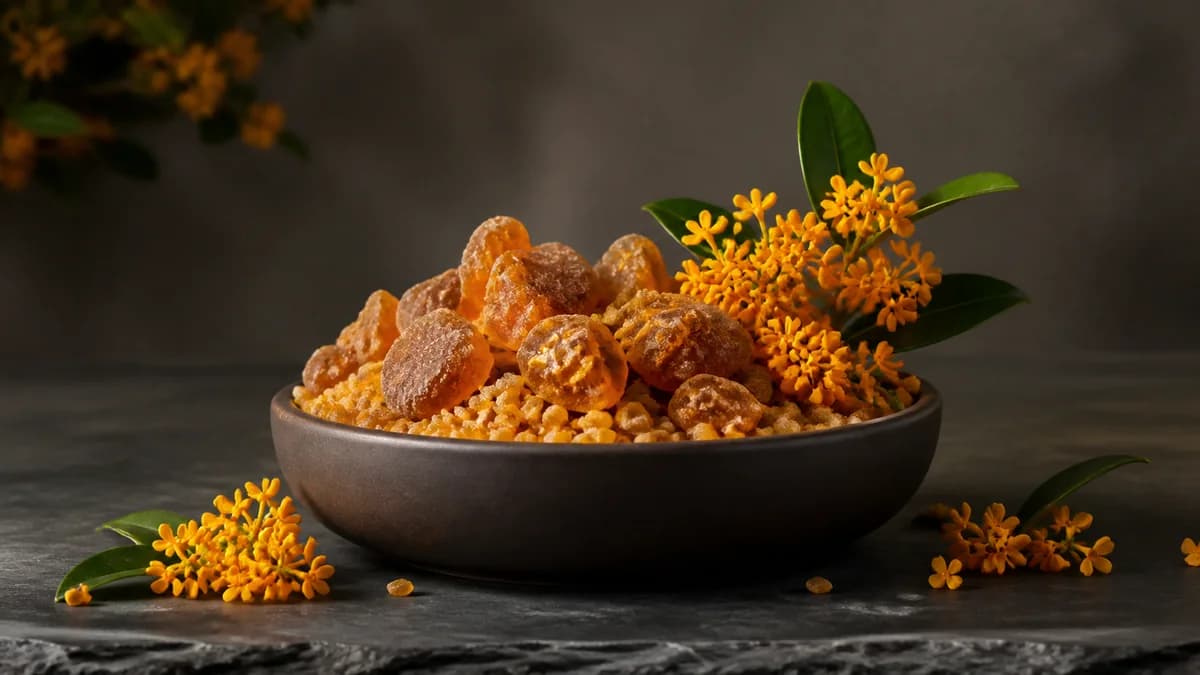
Osmanthus Floral Wax
Osmanthus floral wax (CAS 68917-05-5) is recovered during the production of osmanthus absolute from Osmanthus fragrans. Melting at 62 to 68 degrees Celsius, it carries the flower's distinctive apricot and leather character.
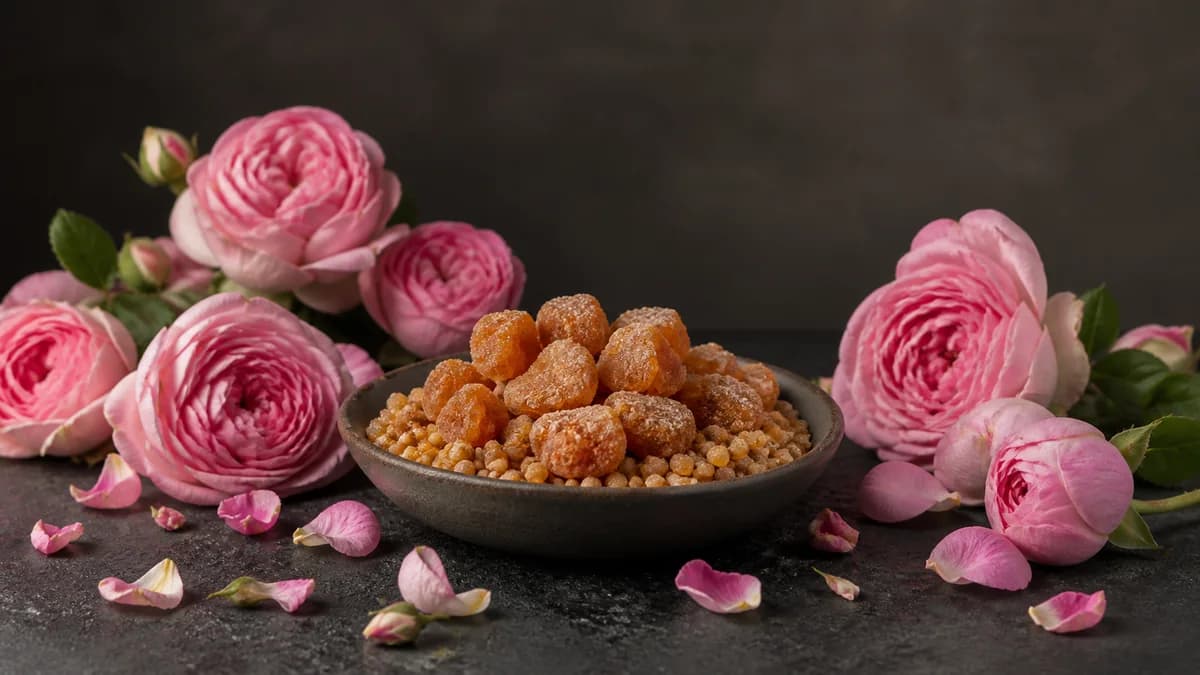
Rose Centifolia Floral Wax
Rose centifolia floral wax (CAS 84604-12-6) is the wax fraction left when rose absolute is washed out of rose concrete. It melts at 62 to 68 degrees Celsius and carries the soft, honeyed scent of the rose de mai petal.
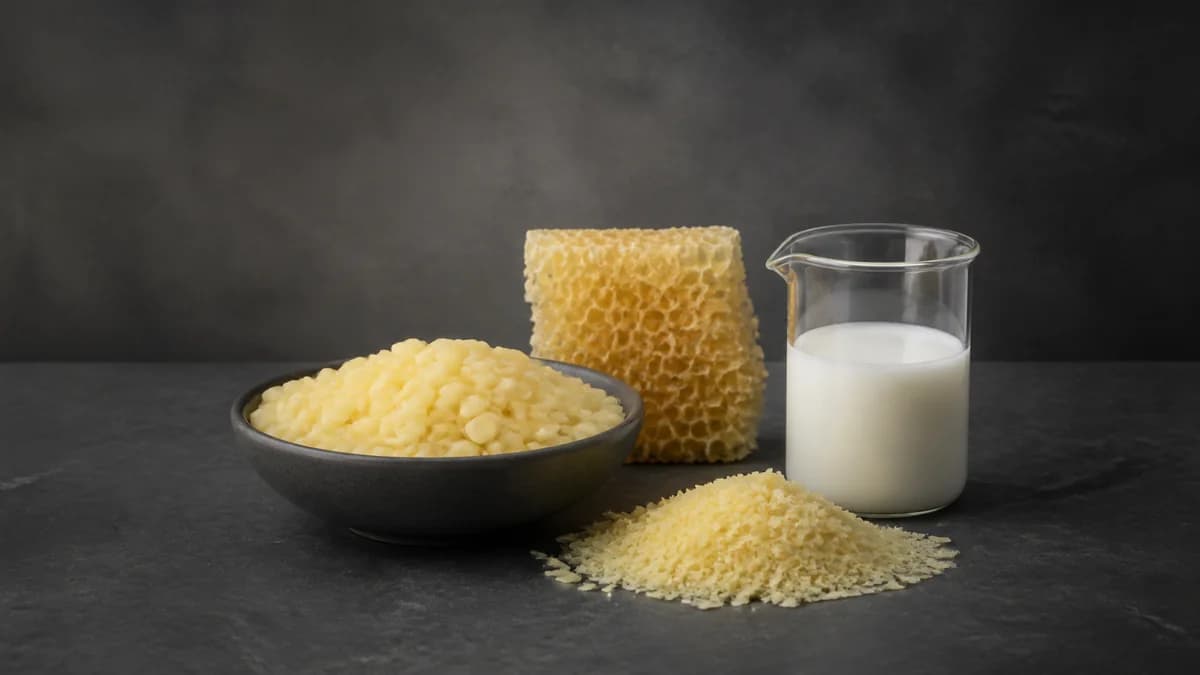
PEG-8 Beeswax
PEG-8 beeswax (INCI PEG-8 Beeswax) is beeswax modified with polyethylene glycol so that it emulsifies as well as structures. It lets a formulator build a stable cream around beeswax without adding a separate emulsifier.

Carnaubawachs
Carnaubawachs wird aus den Blättern der brasilianischen Palme (Copernicia prunifera) gewonnen, wird geerntet, getrocknet und zu einem harten, glänzenden Wachs veredelt. Es ist als „Königin der Wachse“ bekannt und reich an Estern und Fettalkoholen, die für hervorragenden Glanz und Haltbarkeit sorgen.

Palmwachs
Palmwachs (CAS 8021-56-5, INCI Hydrogenated Palm Oil) ist hydriertes Palmöl und wird in Schmelzbereichen von 42 bis 60 Grad Celsius geliefert. Es ist das einzige gängige Pflanzenwachs, das beim Erstarren ein dekoratives kristallines Muster bildet.

Palm-Paraffin-Gemischwachs für Glas-Teelichter
Gebrauchsfertige Low-MP-Glaskerzenmischung: Palm-Paraffin-Mikrokristallin mit Polyboost™, Vybar® und UV-Stabilisatoren – fügen Sie einfach Farbe und Duft hinzu, um eine hervorragende Glashaftung und maximale Leuchtkraft zu erzielen.

Palm-Paraffin-Gemischwachs für Säulenzünder
Gebrauchsfertige Stumpenkerzenmischungen mit hohem MP (56–58 °C und 58–60 °C): Palm-Paraffin-Mikrokristallin mit Polyboost™, Vybar®, UV-Stabilisatoren – fügen Sie einfach Farbe und Duft hinzu, um eine hervorragende Stumpenleistung zu erzielen.

Soja-basierte vegane Wachsmischung
Gebrauchsfertige 95 % vegane Sojamischung aus Bio Green Wax – rein pflanzlich für Kerzen im Glas (48–52 °C) und Stumpen (56–62 °C). Fügen Sie einfach Farbe und Duft hinzu.

Soy- Bienenwachs- Paraffinwachs-Mischung
Gebrauchsfertige Soja-Bienenwachs-Paraffin-Mischung von Bio Green Wax – ultimativer Duft für Kerzen im Glas (48–52 °C) und Stumpen (56–62 °C). Fügen Sie einfach Duft und Farbe hinzu.
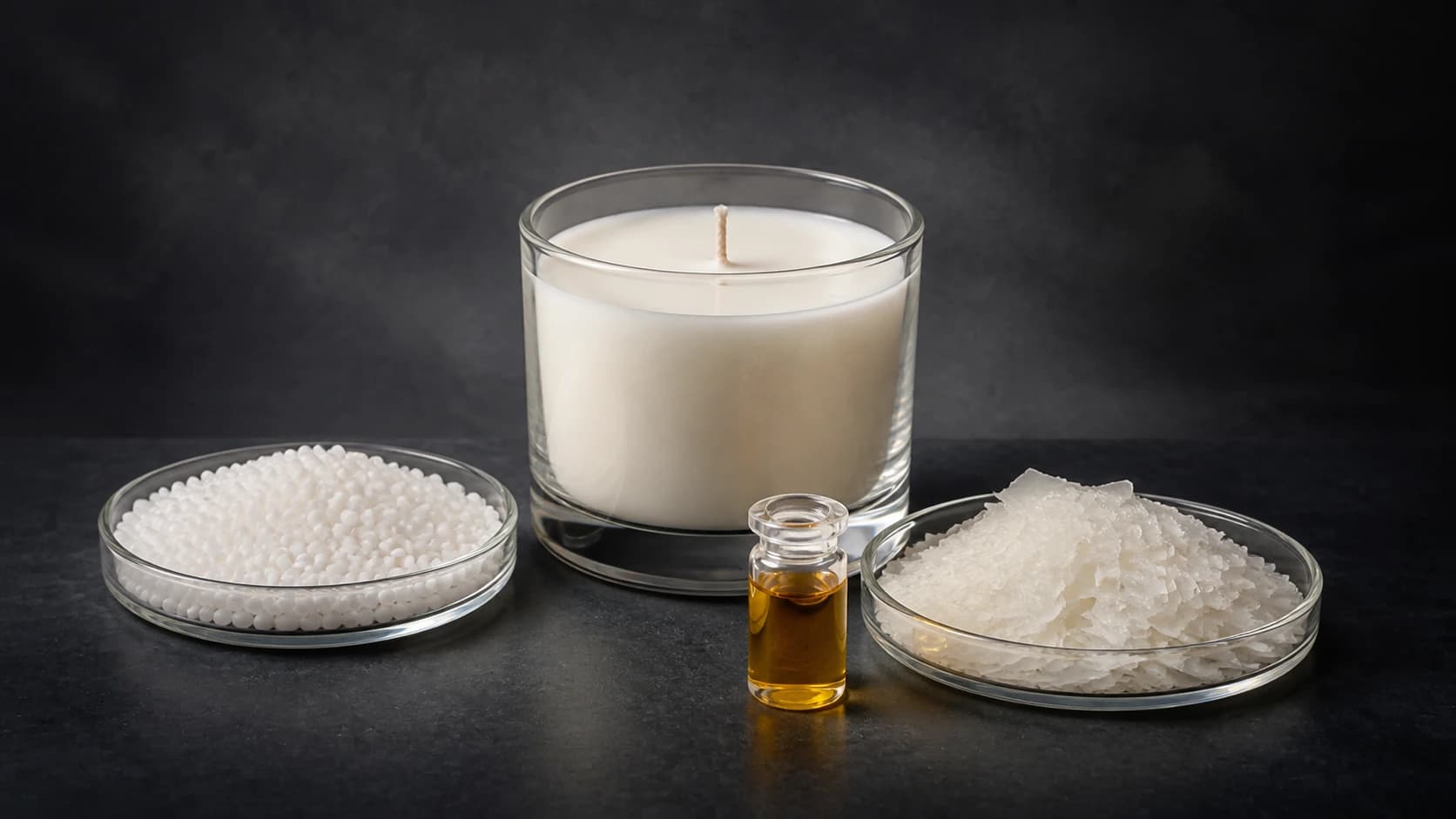
Wax Enhancers & Candle Additives
Wax enhancers are polymer additives such as Polyboost 165 and 130 and Vybar 103, 260 and 363, melting between 92 and 115 degrees Celsius. Added at one percent or less, they bind fragrance oil, harden wax and suppress surface defects.
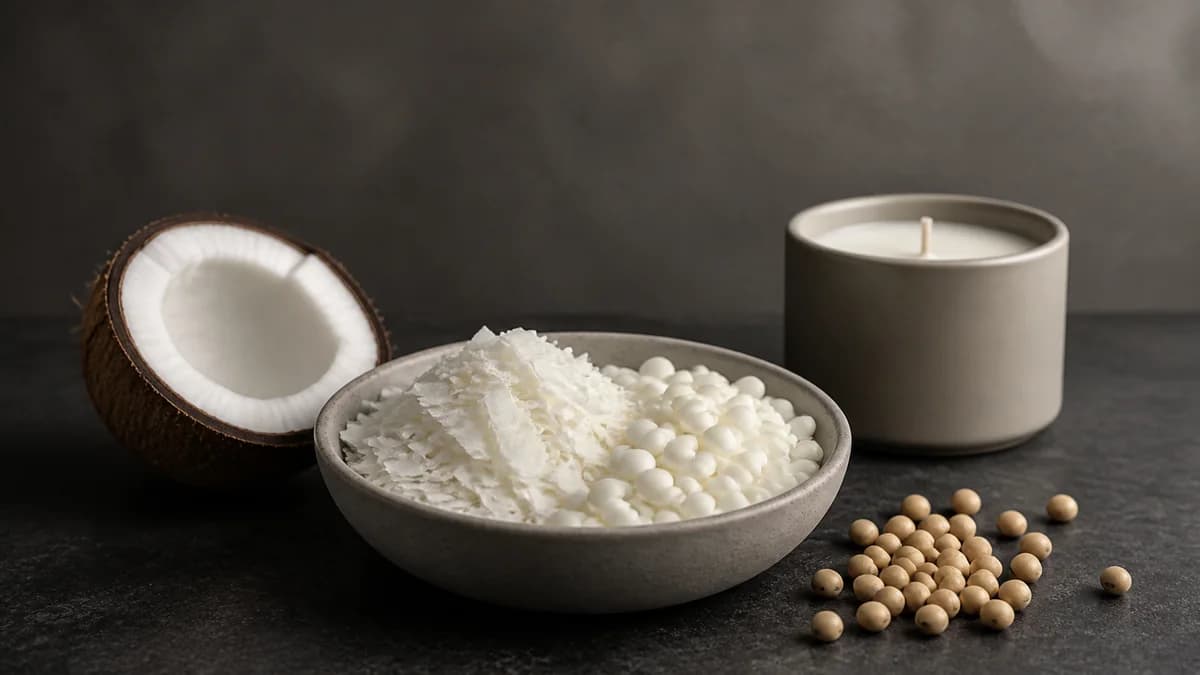
Coconut-Soy Blend Wax
Coconut-soy blend wax combines hydrogenated coconut and soybean oils, supplied at 43 to 47 or 47 to 51 degrees Celsius depending on grade. The coconut fraction lifts fragrance throw; the soy fraction supplies structure and cost control.
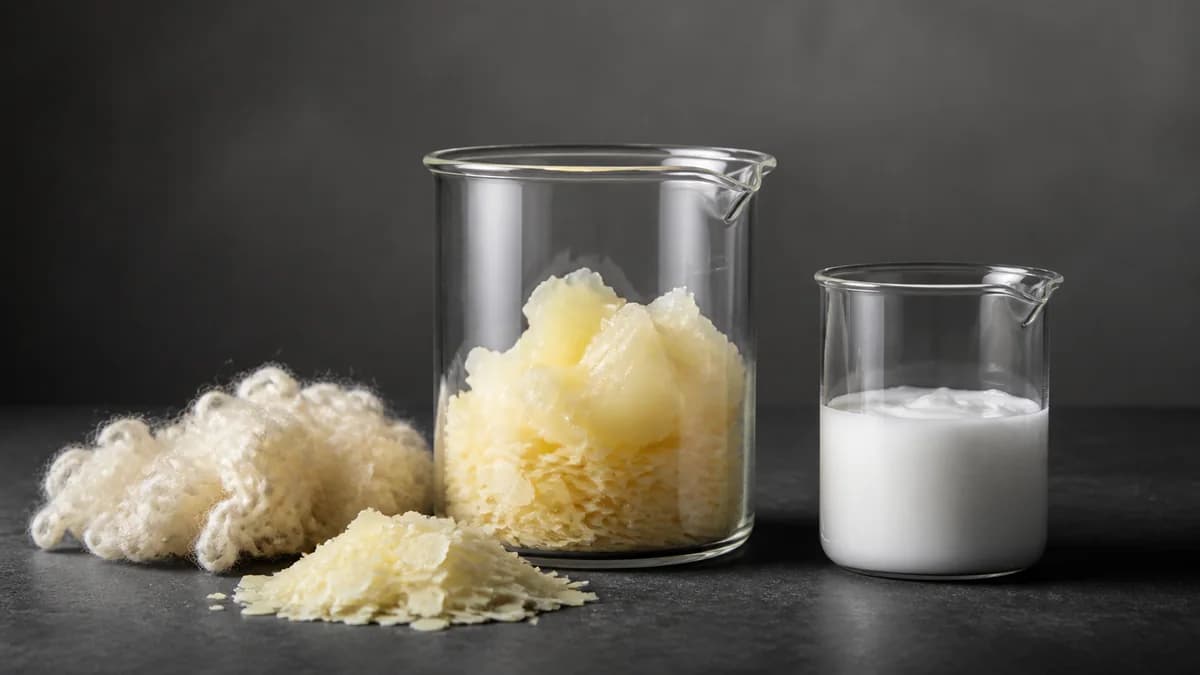
PEG-75 Lanolin
PEG-75 Lanolin (CAS 61790-81-6, INCI PEG-75 Lanolin) ist Lanolin, das so weit ethoxyliert wurde, dass es wasserlöslich wird. Es bringt den pflegenden und emollierenden Charakter von Lanolin in Shampoos, Gele und andere klare wässrige Systeme ein.
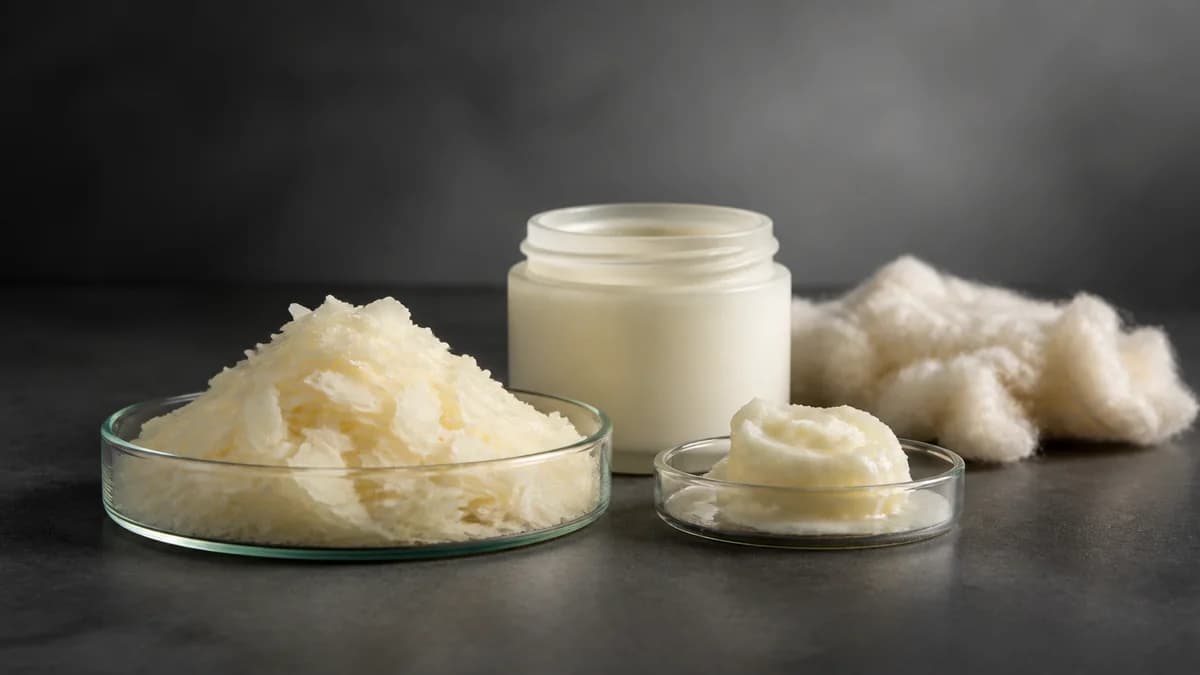
Lanolin Alcohol
Lanolin alcohol (CAS 8027-33-6, INCI Lanolin Alcohol) is the alcohol fraction obtained by saponifying lanolin, rich in cholesterol and lanosterol. It is a powerful water-in-oil emulsifier, able to bind many times its weight in water.
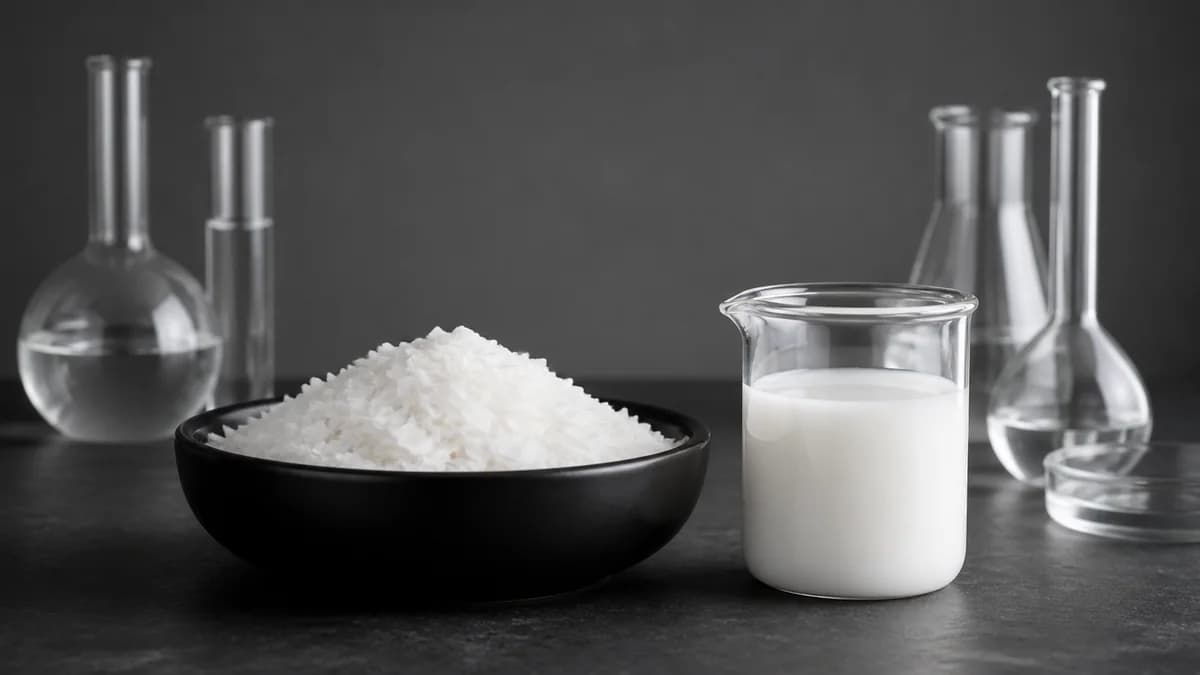
Emulsifying Wax (Glyceryl Stearate & PEG-100 Stearate)
Emulsifying wax (INCI Glyceryl Stearate and PEG-100 Stearate) is a self-emulsifying non-ionic wax melting at 55 to 60 degrees Celsius. It gives a lighter, silkier cream than the cetearyl alcohol type and is the standard lotion emulsifier.
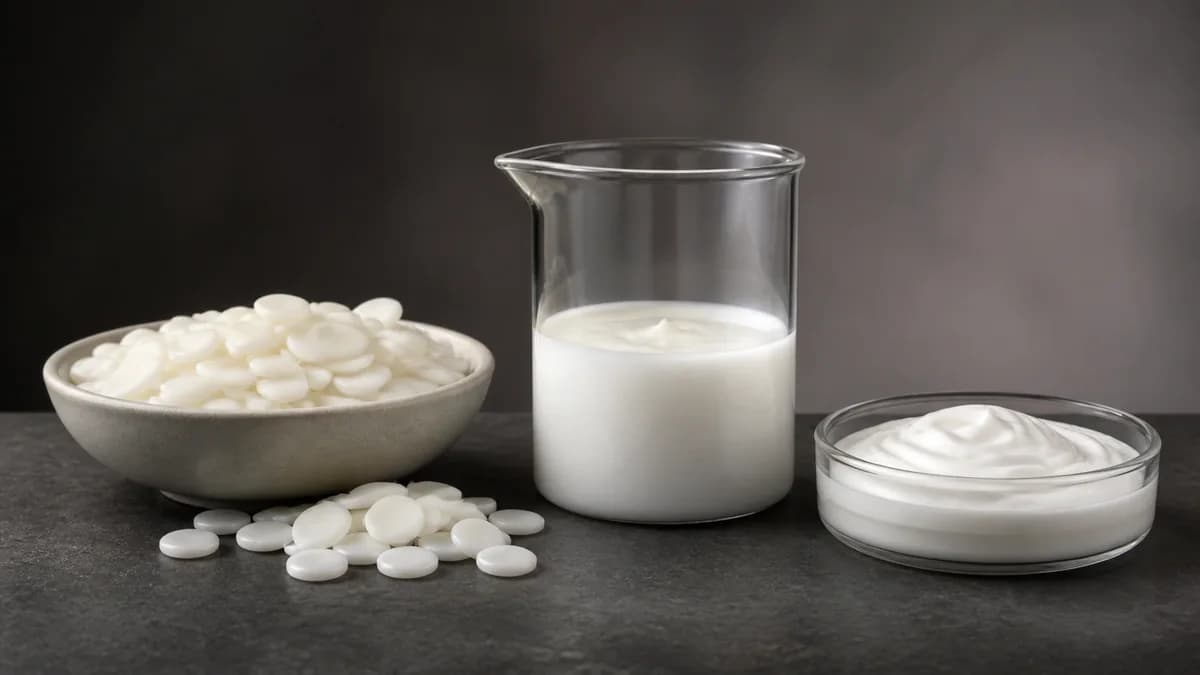
Emulsifying Wax (Cetearyl Alcohol & Polysorbate 60)
Emulsifying wax (INCI Cetearyl Alcohol and Polysorbate 60) is a self-emulsifying non-ionic wax melting at 61 to 65 degrees Celsius. It builds a stable oil-in-water cream from a single ingredient, with no separate emulsifier required.
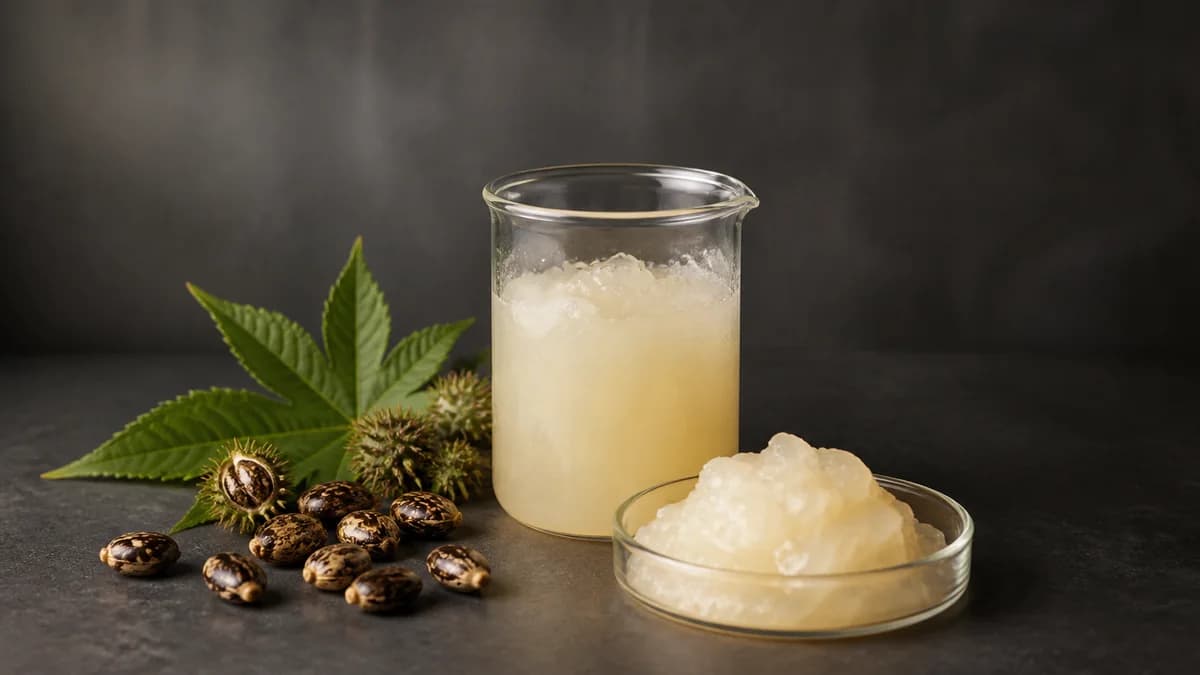
PEG-40 Hydrogenated Castor Oil
PEG-40 hydrogenated castor oil (CAS 61788-85-0) is an ethoxylated castor derivative used as a solubiliser. It is what allows a fragrance or essential oil to be dissolved into water as a completely clear solution rather than a cloudy dispersion.

Kokos-Raps-Wachsmischung
Die Kokos-Raps-Wachsmischung kombiniert hydriertes Kokosöl mit in Europa angebautem Rapswachs und schmilzt bei 42 bis 52 Grad Celsius. Sie bietet die Duftabgabe von Kokoswachs in einer sojafreien, europäischen Lieferkette.

Kakaobutter-Ersatz (CBS)
CBS ist ein hydriertes, fraktioniertes Palmkernfett, frei von Zusatzstoffen, allergenfrei, mit sauberer Schmelze und schneller Kristallisation. Ideal zum Formen und Überziehen von Schokolade.

Colourful Sand Wax
Colourful sand wax (CAS 8021-56-5, INCI Hydrogenated Palm Oil) is a granulated palm wax supplied in more than fifteen colours. It is poured cold around a wick like sand, with no melting equipment required at any stage.
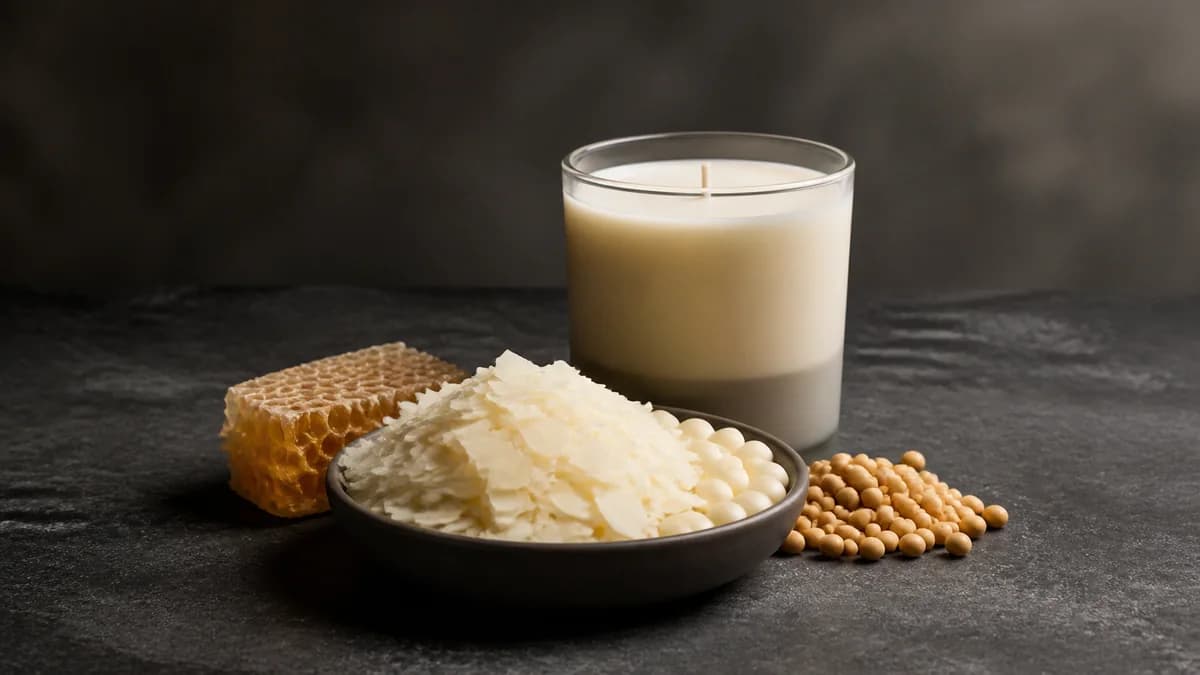
Bienen-Soja-Mischwachs
Bienen-Soja-Wachsmischung kombiniert Bienenwachs mit gehärtetem Sojaöl und schmilzt bei 48,7 bis 52,7 Grad Celsius. Das Bienenwachs verleiht einer Sojabasis, die für sich genommen für viele Formate zu weich ist, Festigkeit, Brenndauer und natürlichen Charakter.
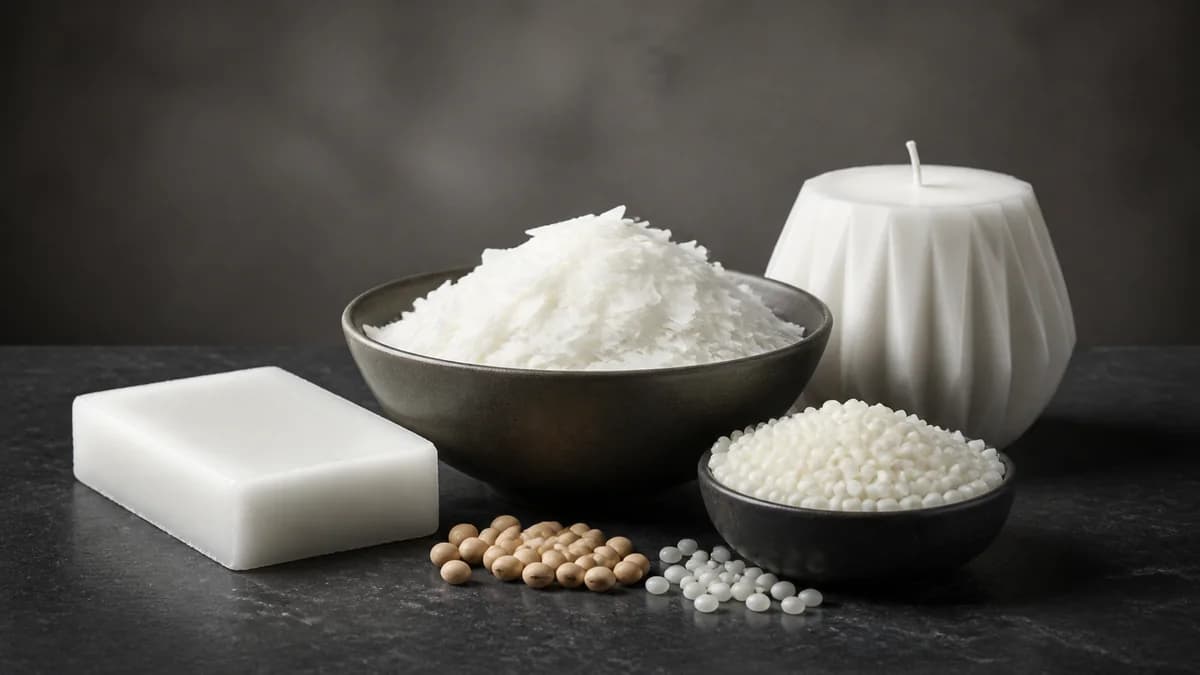
Para-Soy Blend Wax
Para-soy blend wax combines paraffin with hydrogenated soybean oil, supplied at 48.6 to 52.6 degrees Celsius for containers and 55 to 60 for pillars. The paraffin fraction restores the fragrance throw and clean surface that plain soy lacks.
Palmkernstearin
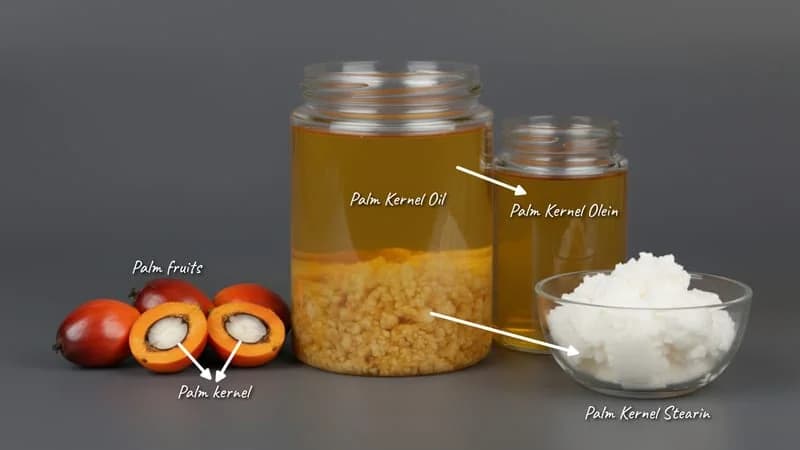
Palmkernstearin, die feste Fraktion des Palmkernöls (Elaeis guineensis), wird durch Fraktionierung gewonnen. Aufgrund seines hohen Sättigungs- und Laurinsäuregehalts wird es in Süßwarenfetten, Backfetten und Industrieseifen verwendet.

Palmstearin
Palmstearin, der feste Anteil des Palmöls (Elaeis guineensis), wird durch Fraktionierung hergestellt. Reich an gesättigten Fetten, wird es weitgehend in Backfett, Margarine und industriellen Anwendungen wie Kerzen und Seifen verwendet.

Palmöl-Shortenings (hoher Schmelzpunkt)
Palmfette (mit hohem Schmelzpunkt), gewonnen aus fraktioniertem Palmöl, sind Spezialfette für Back- und Bratanwendungen, bei denen Stabilität erforderlich ist. Mit ihrer festen Konsistenz und hohen Sättigung werden sie in Blätterteiggebäck, Keksen und beim industriellen Braten verwendet.

Palm-Stearinsäure
Palmstearinsäure ist eine gesättigte Fettsäure (C₁₈H₃₆O₂), die durch Hydrolyse und Fraktionierung aus Palmöl gewonnen wird. Es erscheint als weißer, wachsartiger Feststoff mit mildem Geruch und ist eine der am häufigsten in Industrie- und Verbraucherprodukten verwendeten Fettsäuren.

Palmkernfettsäurendestillat (PKFAD)
Palmkernfettsäuredestillat (PKFAD) ist ein Nebenprodukt der Palmkernölraffinierung (Elaeis guineensis), das während der Desodorierungsphase anfällt. Es ist reich an Laurin- und Myristinsäure sowie geringen Mengen an Öl- und Palmitinsäure, Tocopherolen und Sterinen.

Seifennudeln
Seifennudeln sind halbfertige Seifenprodukte, die durch Verseifung pflanzlicher Öle oder tierischer Fette mit Natriumhydroxid (Lauge) hergestellt werden. Sie kommen in kleinen, pelletartigen Formen vor und dienen als Grundmaterial für die Herstellung von Stückseifen.

Palmöl-Shortenings (niedriger Schmelzpunkt)
Palmfette (niedriger Schmelzpunkt), hergestellt aus der Fraktionierung von Palmöl, sind weichere Fette, die sich ideal für Kuchen, Kekse und Aufstriche eignen. Mit ausgewogener Sättigung sorgen sie für eine glatte Textur, einfaches Mischen und eine butterartige Konsistenz.

Palmölfettsäurendestillat (PFAD)
Palmfettsäuredestillat (PFAD) ist ein Nebenprodukt der Palmölraffinierung (Elaeis guineensis), das bei der Desodorierung anfällt. Es enthält freie Fettsäuren, Tocopherole, Sterole und Restöl und ist daher wertvoll für Tierfutter, Seifenherstellung und Biodieselproduktion.

Glycerin
Glycerin (Glycerin, C₃H₈O₃) ist eine farblose, geruchlose, viskose Flüssigkeit mit süßem Geschmack, die auf natürliche Weise als Nebenprodukt bei der Seifenherstellung, der Biodieselproduktion und der Fettspaltung entsteht.

Palmöl
Palmöl, gewonnen aus der Frucht der Ölpalme (Elaeis guineensis), ist eines der weltweit am häufigsten verwendeten Speiseöle. Reich an Tocotrienolen, Carotinoiden und ausgewogenen Fetten ist es in der Küche, in verpackten Lebensmitteln, Kosmetika, Seifen, Pharmazeutika und Biokraftstoffen unverzichtbar.

Sonnenblumenöl
Sonnenblumenöl, gewonnen aus Sonnenblumenkernen (Helianthus annuus), ist ein reines, vielseitiges Pflanzenöl, reich an herzfreundlichen Linol- und Ölsäuren sowie antioxidativem Vitamin E. Weltweit bewährt beim Braten, Backen, für Kosmetika, Pharmazeutika und Biodieselanwendungen.

Kokosöl
Kokosnussöl wird aus reifen Kokosnusskernen (Cocos nucifera) gewonnen und ist ein natürliches, vielseitiges Öl, das reich an mittelkettigen Triglyceriden (MCTs), Laurinsäure und Antioxidantien ist. Wird häufig zum Kochen, für Kosmetika, Haarpflege, Pharmazeutika und für industrielle Anwendungen wie die Seifenherstellung verwendet.

Sojaöl
Sojaöl, gewonnen aus Sojabohnensamen (Glycine max), ist eines der am häufigsten konsumierten Pflanzenöle weltweit. Reich an mehrfach ungesättigten Fettsäuren, Omega-3-Fettsäuren und Vitamin E, ist es ein Grundnahrungsmittel in der Küche, verarbeiteten Lebensmitteln, Margarine, Biodiesel, Tinten und Schmiermitteln.

Rapsöl
Rapsöl, gewonnen aus Rapssamen (wissenschaftlicher Name: Brassica napus), ist ein leichtes, neutrales Pflanzenöl, das durch Pressen und Raffinieren gewonnen wird. Moderne „Raps“-Sorten wurden entwickelt, um Erucasäure und Glucosinolate zu reduzieren und sie so sicher und nahrhaft zu machen.
Olivenöl
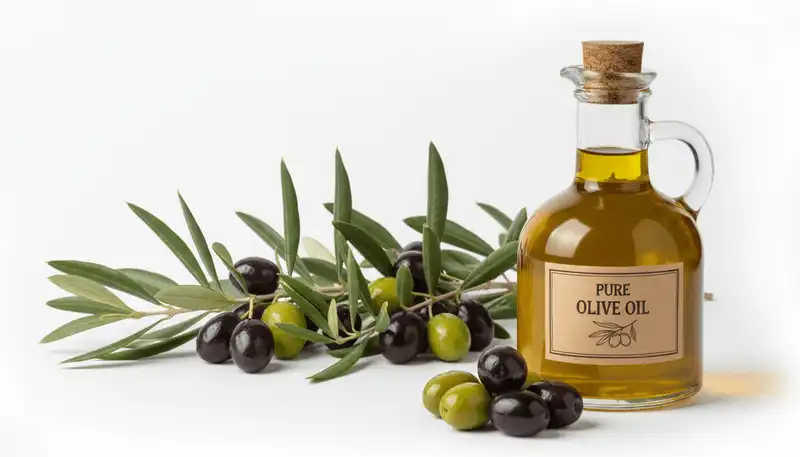
Aus Oliven gewonnenes Olivenöl (wissenschaftlicher Name: Olea europaea) wird durch Kaltpressen oder Raffinieren gewonnen, wobei „extra native“ Sorten ein Maximum an Geschmack und Antioxidantien behalten.

Rizinusöl
Rizinusöl, gewonnen aus Rizinussamen (wissenschaftlicher Name: Ricinus communis), wird durch Pressen und Raffinieren gewonnen. Es zeichnet sich durch seinen hohen Ricinolsäuregehalt aus, der ihm entzündungshemmende, feuchtigkeitsspendende und abführende Eigenschaften verleiht.
Palmkernolein
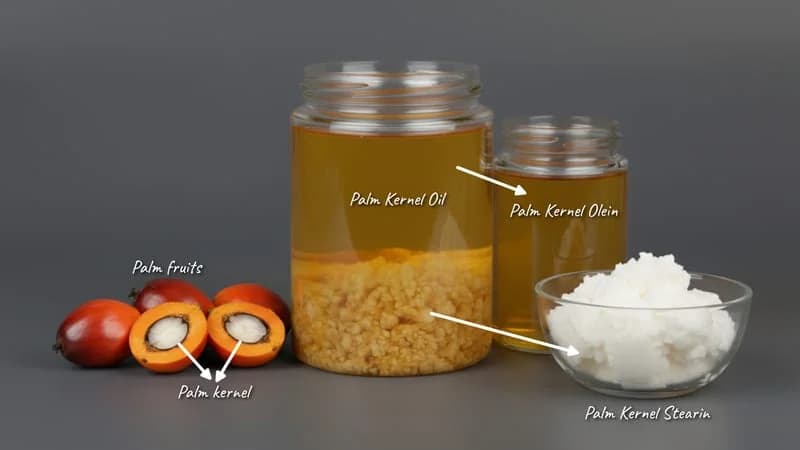
Palmkernöl, das aus der Fraktionierung von Palmkernöl (Elaeis guineensis) gewonnen wird, ist ein klares, stabiles Öl mit hohem Laurinsäuregehalt. Aufgrund seiner scharfen Schmelzkurve wird es in Süßwaren, Eiscremeüberzügen und Spezialfetten geschätzt.

Palmölein
Palm Olein, die flüssige Fraktion des Palmöls (Elaeis guineensis), wird durch Fraktionierung gewonnen. Es ist reich an Tocotrienolen, Carotinoiden und ausgewogenen Fettsäuren und eignet sich daher gut zum Frittieren und zum täglichen Kochen.

Palmkernöl
Palmkernöl wird aus den Samen der Ölpalmenfrucht (Elaeis guineensis) gewonnen und durch Pressen und Raffinieren des Kerns gewonnen. Es ist hochgesättigt, reich an Laurinsäure und mittelkettigen Triglyceriden und verleiht ihm Festigkeit und Stabilität.